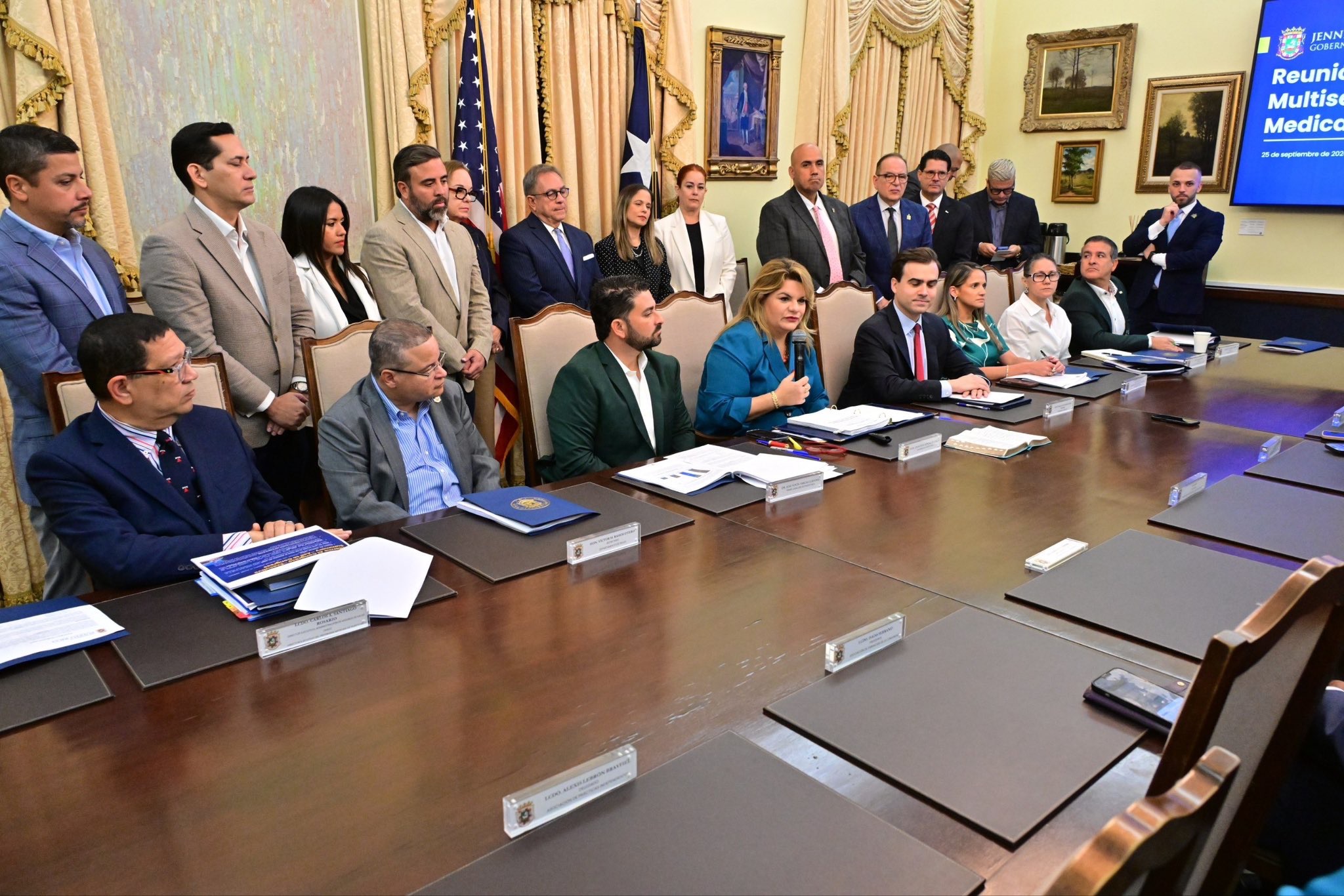
October 4, 2026 — La Fortaleza, San Juan, Puerto Rico — Governor Jenniffer González-Colón presented the Final Report of the Multisectoral Advisory Board on Puerto Rico’s Medicaid Program, a comprehensive analysis documenting the needs of the Island’s healthcare system, the progress achieved in the administration of the program, and the consequences Puerto Rico would face if the unequal federal funding structure is not addressed before Fiscal Year 2028.
The report was developed under Executive Order 2026-006 and included multisectoral participation from government agencies, healthcare providers, community health centers, managed care organizations, beneficiary representatives, and other sectors connected to the healthcare system.
“This report puts the data on the table and demonstrates why Puerto Rico needs a solution for Medicaid. We are talking about access to healthcare services for thousands of families, seniors, children, and people with disabilities. We have met federal requirements, strengthened program oversight, and used additional resources to expand services and improve access. Now it is time to work together to secure a funding structure in Congress that provides stability for our healthcare system beyond 2027,” said Governor González-Colón.
Medicaid currently covers about 40 percent of Puerto Rico’s population. Under the Consolidated Appropriations Act, 2023, the federal medical assistance percentage, known as FMAP, was temporarily increased to 76 percent through Fiscal Year 2027, accompanied by increases in federal funding. These resources have allowed Puerto Rico to expand eligibility, add services, and strengthen provider reimbursements.
Among the advances documented in the report, Puerto Rico increased the minimum Medicaid reimbursement rate for medical services to 100 percent of the Medicare Part B fee schedule, while also increasing behavioral health rates, reviewing dental service rates, and strengthening hospital payment mechanisms. The report also documents efforts to comply with federal requirements related to program integrity, contracting, oversight, and transparency.
The report indicates that, absent congressional action, federal funding could decline by approximately $3.36 billion annually, while the FMAP would return to the 55 percent rate established by law. As Resident Commissioner, Jenniffer González secured federal funding on four occasions to protect healthcare coverage for more than 1.3 million patients: $295.9 million in 2017, $4.9 billion in 2018, $4.3 billion in 2019, and a five-year, $19 billion agreement in 2022.
“Waiting until 2028 is not an option. This is the time to work with Congress, on a bipartisan basis, to prevent a funding crisis that would have consequences not only for patients, but also for our doctors, hospitals, healthcare providers, and the entire economy of Puerto Rico. Our administration will continue advocating in Washington for fair treatment for American citizens who live in Puerto Rico,” said Governor González-Colón.
Among the alternatives presented in the report is the elimination of the federal funding limit, or allotment ceiling, established under Section 1108 of the Social Security Act, and the application to Puerto Rico of the same formula used to calculate the FMAP for the states. According to the report, this approach would likely result in an FMAP of approximately 83 percent. The document emphasizes that any increase in the FMAP must be accompanied by an increase or elimination of the federal funding cap to prevent Puerto Rico from exhausting its allocation more quickly.
The report also calls for expanding Puerto Rico’s participation in federal programs that are currently unavailable on the same terms, including payments for hospitals that serve a significant proportion of uninsured or underinsured patients; access to the Medicare Savings Program to assist low-income beneficiaries with Medicare premiums and cost-sharing requirements; and access to Long-Term Services and Supports (LTSS). If sufficient funding is not available to implement LTSS Island-wide, the document proposes considering a regional pilot program.
The document further establishes that Puerto Rico’s strategy before Congress should be bipartisan and multisectoral, bringing together the Government, healthcare providers, managed care organizations, and beneficiary representatives around verifiable data on the program’s needs and outcomes.
“This cannot be a demand from one party or one administration. This is a demand from Puerto Rico. We must go to Washington united, with evidence, results, and a clear proposal. The report demonstrates how far we have come, but it also makes clear that a temporary solution cannot replace the stability our healthcare system needs. We will use this document as part of our efforts before Congress and the federal government to secure a long-term solution,” concluded Governor González-Colón.
The final report states that Puerto Rico will continue strengthening the governance, technological infrastructure, oversight, transparency, and administration of the Medicaid Program, in coordination with federal authorities and the various components of the healthcare system.